
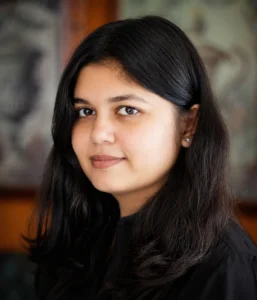
- Shambhavi Naik
Chairperson, Advanced Biology Programme, Takshashila Institution
The Bioeconomy Needs more Women at the Policy Table
Thirteen years at the lab bench taught me how to read evidence. I trained as a cancer biologist — at Leicester, then at NCBS and InStem in Bengaluru. I loved the work. But I kept noticing that India’s life sciences policy was being shaped without the people it most affected. That realisation pulled me into public policy, where I now lead Takshashila Institution’s Advanced Biology Programme — working on gene-editing governance, bioeconomy strategy, and biosecurity.
What I did not fully anticipate was how consistently women would be at the centre of every issue I touched.
When I worked on making GM crop regulation more evidence-based, the sharpest concern was the impact herbicide-resistant crops would have on India’s agricultural weeders; overwhelmingly women. When I worked on seaweed cultivation policy, women turned out to be the primary coastal workforce whose livelihoods the policy would reshape. When I worked on biofortification, improved bioavailability of iron and folate stood to benefit women and girls most directly.
The pattern is hard to miss. Women are the farmers, the harvesters, the patients, the caregivers, and the primary workforce in nearly every domain that life sciences policy touches. Yet they remain largely absent from the rooms where that policy is written.
Policy designed without the people it most affects will miss things that matter. My advice to women in the life sciences: the policy table does not just need your expertise — it needs your lived experience of being on the receiving end of these decisions.
“The best policy is made when those making it understand the lived experience of all stakeholders”