
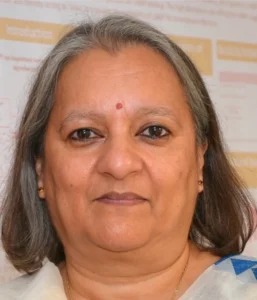
- Sandhya Visweswariah
Professor, Department of Molecular Reproduction, Development and Genetics, Indian Institute of Science (IISc), Bengaluru
Diversity of thought and action is welcome in any sphere of human activity. In science, where researchers look for novelty and fresh ideas, it should be a natural desire to encourage the inclusion of women and less-represented communities in research and academic institutions. Too often, it is seen that women are few in number in universities and places of higher education. What is surprising is if one looks at the achievements of girls till university, they do better than their male colleagues. Further, in disciplines like the biological sciences, women outnumber men at the PhD level in most departments, but women faculty in some leading institutions in India usually represent 10-20% in most departments. Why is this the case? Why do young women feel that a career in scientific research is difficult, especially if they choose to have a family?
This is where Institutions can step in to alter the balance. Heads of institutions, who are invariably men, must create an environment that makes women feel welcome. They and other senior administrators should meet regularly with early career researchers, both men and women, to understand their needs. In fact, an essential requirement is that women occupy senior positions in academic institutions, as is seen in many big corporates, so that the culture of ‘old men at the top’ is reduced. This will allow mentoring of junior women colleagues to help them adapt to the predominantly male environment and still reach higher positions. “There must be a proactive drive to recruit and assess women researchers, since women in general do not put themselves forward for awards or recognition”.
Day care facilities must be made available easily and close to the workplace, since the responsibility of caring for young children usually lies with the woman, especially in societies like ours. There must be favourable tenure track options that take into consideration the possibility that women may have children during the first few years of their establishing an independent research group. This is nothing to worry about! In fact, I find that women who have families with young children do as well (if not better!) than their male colleagues of equal seniority. In the years ahead, institutions that have encouraged women in their community will be enriched and thrive. Such institutions will have brought in a different outlook to life and science, a varied approach to handle professional and personal issues, as well as show the younger generation that men and women are equal in all spheres of life.